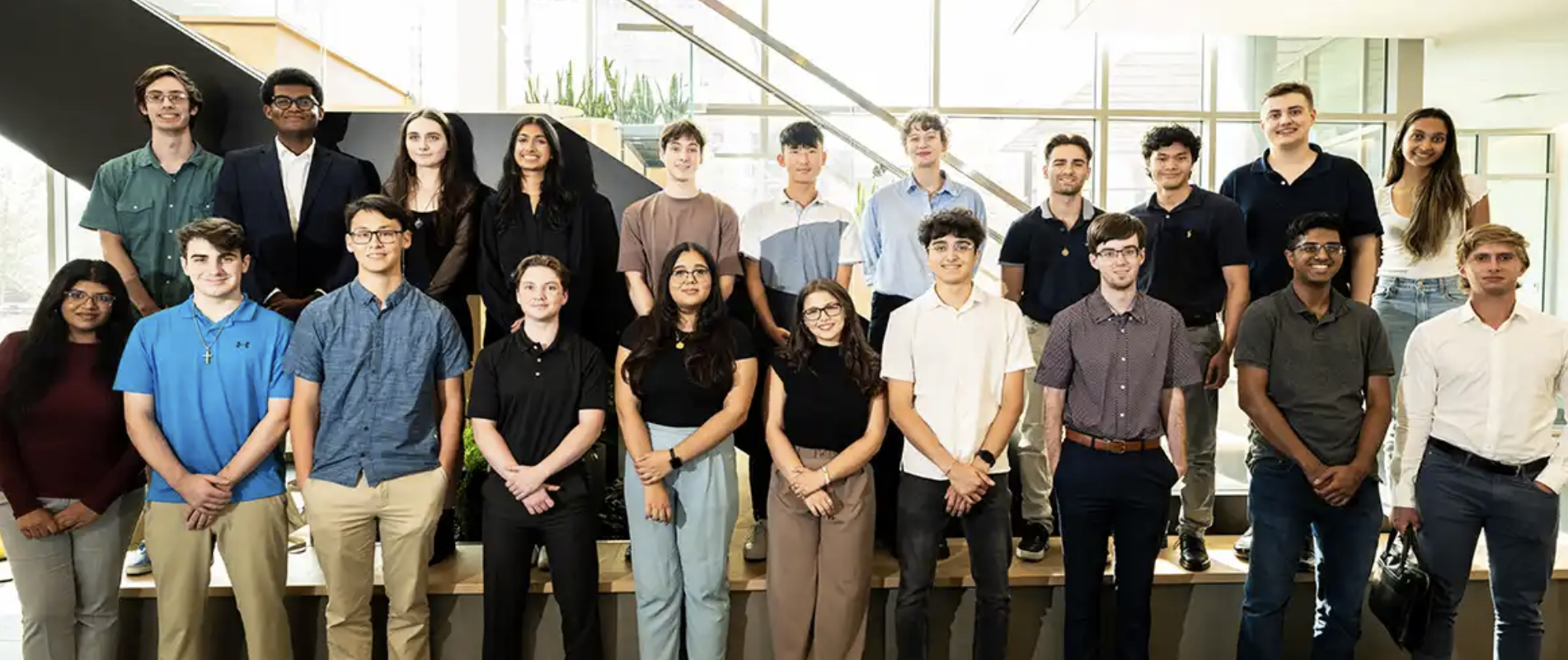
ASPiRe 2024 summer research cohort and presentation day photo.
With the prevalence of cardiovascular disease, there is an urgent need for the development of novel biomaterials for clinical applications. However, synthetic materials frequently fail when used for small-diameter vascular repair. Common issues include thrombosis, intimal hyperplasia, and, as with any biomaterial, immune rejection.
Fortunately, recent developments in bioengineering have enabled scientists to explore plant-based tissues as a solution. They can be engineered to have minimal plant DNA and seeded with the proper cells for implantation, lowering the chances of rejection. Since plant-based biomaterials are still new, research in this area remains limited.
This summer, I began investigating methods that support the standardization of plant use in biomaterial engineering. I studied different decellularization detergents, enzyme conditions, time spent in necessary processing solutions, and sample collection locations. Differences and impacts were evaluated through tensile testing, histological processing, and image analysis.
As decellularization time was reduced, we observed less structural and mechanical damage to the plant extracellular matrix. Through optimization of these protocols, we aim to improve standardization of emerging plant-derived decellularization strategies for vascular repair.
ASPiRe 2024 summer research cohort and presentation day photo.

ASPiRe 2024 cover slide for vascular repair project presentation.